Skip to content

Biology

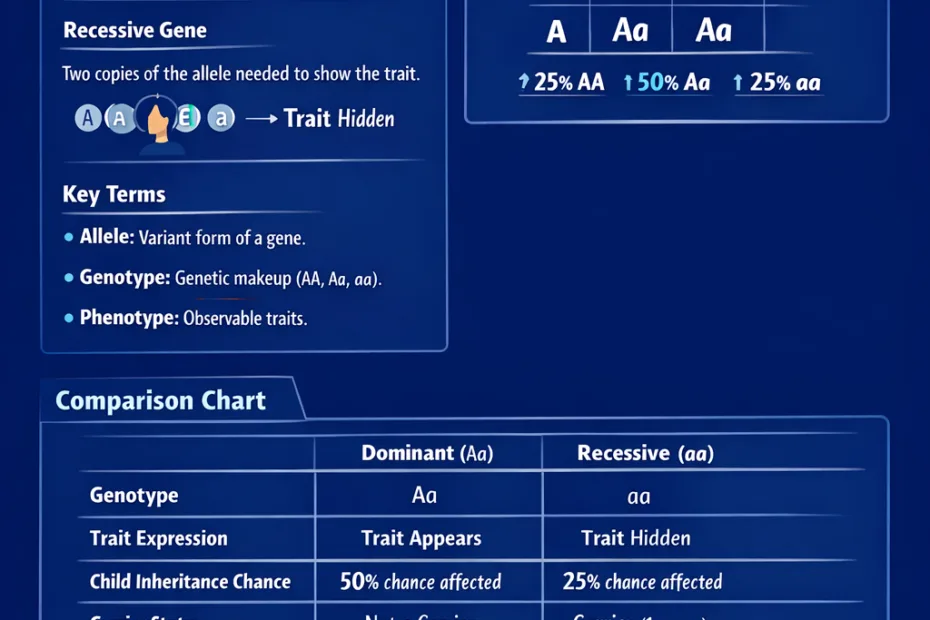
Genetics 101 infographic shows a colorful chart comparing dominant and recessive genes with letter representat…

Genetics 101: Dominant and Recessive Genes Simplified

Dominant and recessive genes describe how two versions of the same gene (alleles) show up in traits when a person inherits one version from each parent—not whether a gene is “strong,” “better,” or more common.[a]↗ A Clean Mental Model Dominant means one allele can be enough to influence the observable trait in a typical two-allele setup; recessive means the trait usually needs two copies of… Genetics 101: Dominant and Recessive Genes Simplified
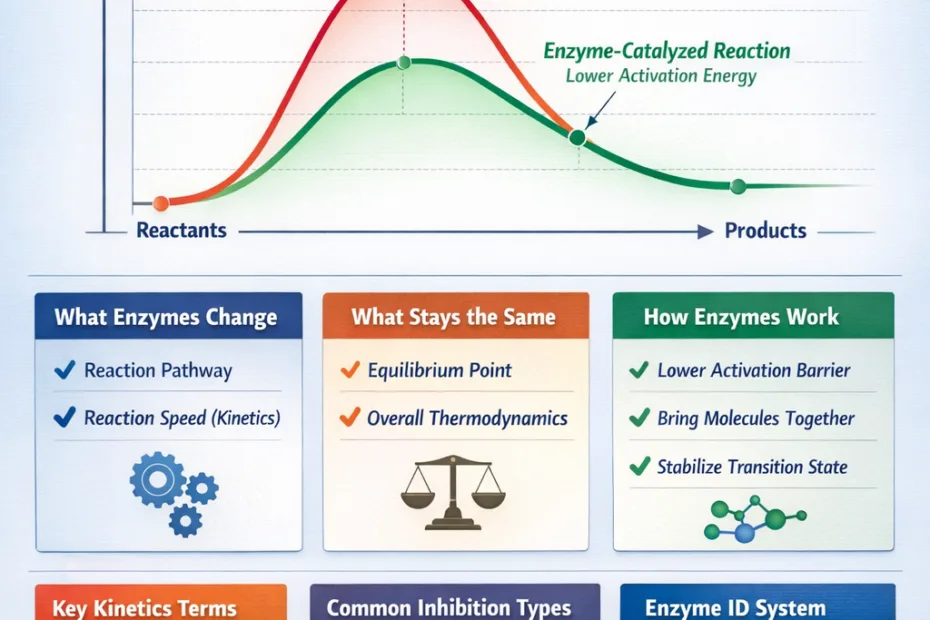
Enzymes and temperature graph with a blue test tube, illustrating how biological catalysts speed up reactions.

Enzymes Explained: How Biological Catalysts Speed Up Life

An enzyme is a biological catalyst that speeds up a chemical reaction in living systems without being permanently used up, usually by making it easier for molecules to reach the reaction’s “go” moment (the activation energy step). [a]↗[b]↗[c]↗ A Clear Snapshot Before We Dive In Enzymes are the reason biology can run at real-world speed: digestion, muscle movement, DNA copying, and cell signaling all rely… Enzymes Explained: How Biological Catalysts Speed Up Life

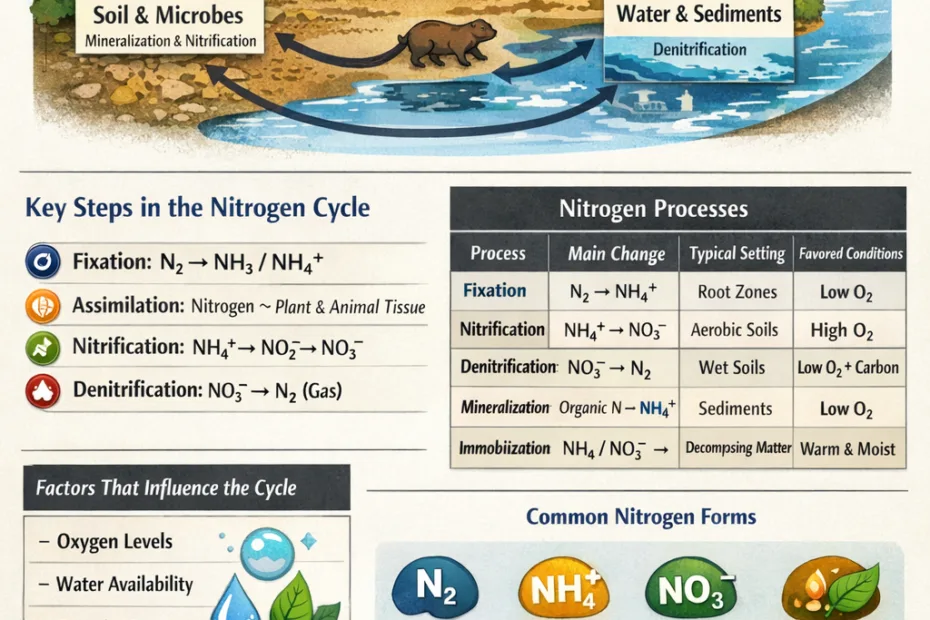
A diagram showing nitrogen movement through the ecosystem with arrows linking plants, soil, and bacteria.

The Nitrogen Cycle: How Nitrogen Moves Through the Ecosystem

The nitrogen cycle is the natural way nitrogen moves between the air, living things, soil, and water by changing chemical form—most often from inert N2 into “usable” forms like ammonium and nitrate, then back again.[a] 🔗 A Clear Picture First Nitrogen is everywhere, but life can’t use most of it directly. Ecosystems rely on microbes to “translate” nitrogen into forms plants can absorb, then recycle… The Nitrogen Cycle: How Nitrogen Moves Through the Ecosystem

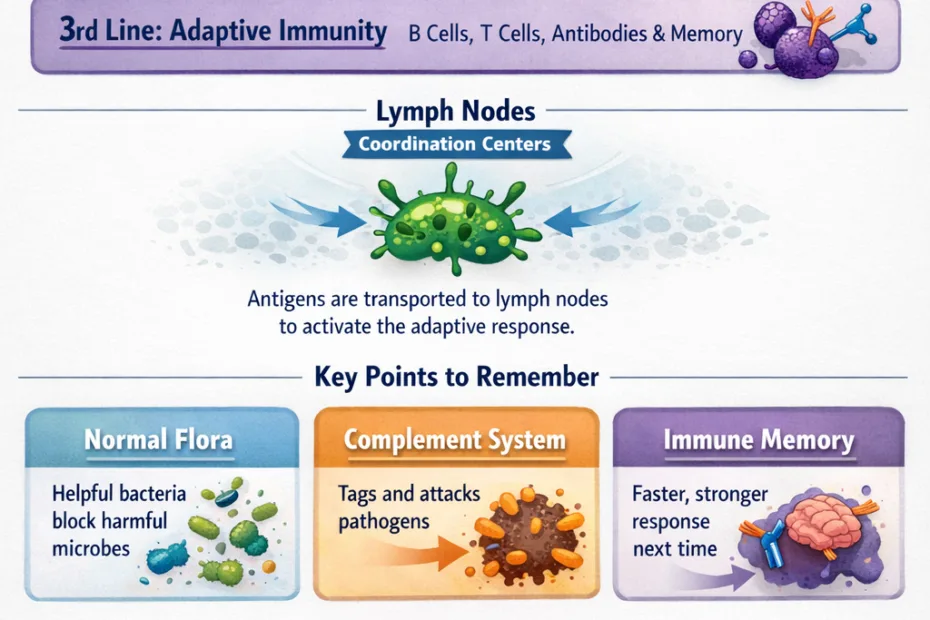
A diagram showing the human immune system's defense lines, with white blood cells attacking pathogens.

How the Human Immune System Works: Lines of Defense

The human immune system is your body’s built-in defense network that recognizes and responds to germs (like bacteria and viruses) and other things that don’t belong. It works through layered “lines of defense”: barriers that block entry, fast internal responses that slow invaders down, and a targeted system that learns and remembers for the next time.[a]↗ “Lines of defense” is a simple way to describe… How the Human Immune System Works: Lines of Defense

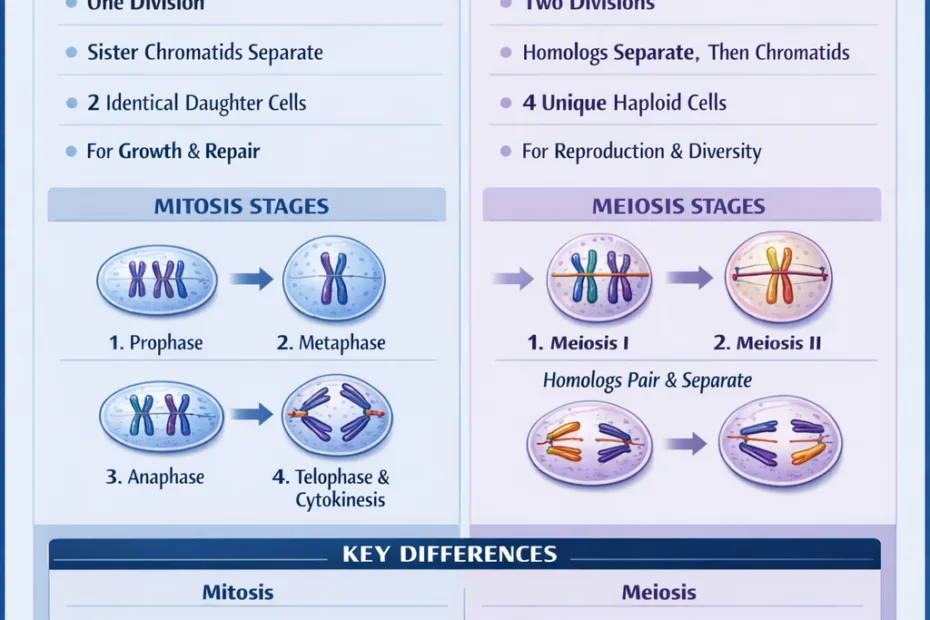
Cells divide through mitosis or meiosis, illustrated with diagrams of cell stages and chromosome structures.

Mitosis vs. Meiosis: How Cells Divide and Reproduce

Mitosis and meiosis are two ways eukaryotic cells divide their DNA. Mitosis makes two matching cells for growth and routine renewal, while meiosis makes reproductive cells (and, in many organisms, spores) by halving the chromosome set and mixing genetic material so new individuals start with a fresh combination.[c]↗ A Clear Way to Think About It Mitosis is about keeping things consistent: same chromosome set in,… Mitosis vs. Meiosis: How Cells Divide and Reproduce

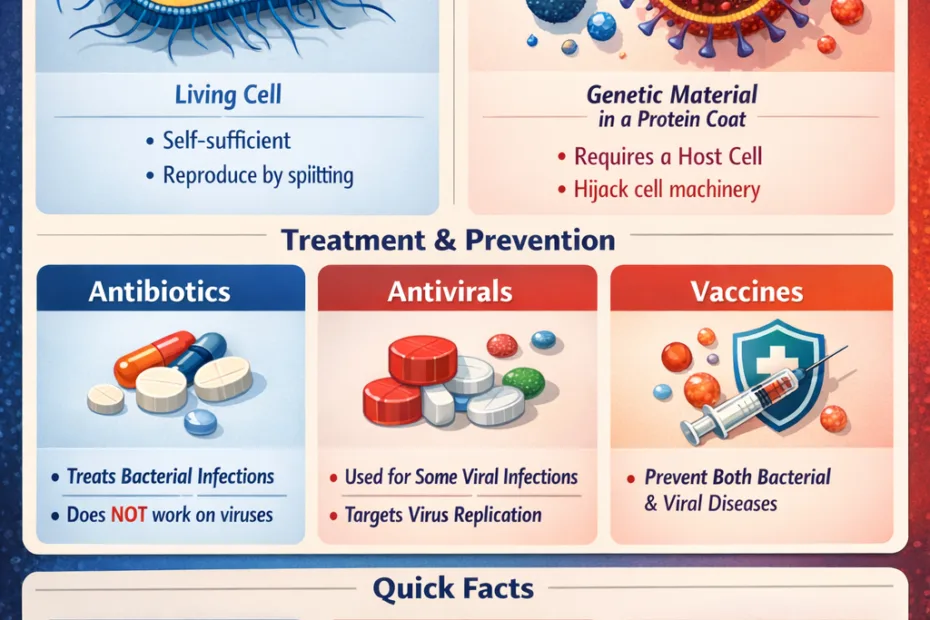
Bacteria and viruses are shown with labeled illustrations, highlighting their difference in structure.

Bacteria vs. Virus: What Is the Difference?

Bacteria are living, single-celled organisms, while viruses are infectious particles made of genetic material wrapped in a protein coat that must use a host cell to make copies of themselves.[a]🔗[b]🔗 A Clear Way to Think About It Bacteria are complete cells with their own machinery. Viruses are genetic instructions in a protective shell. That single difference explains how they multiply, what medicines work, and why… Bacteria vs. Virus: What Is the Difference?

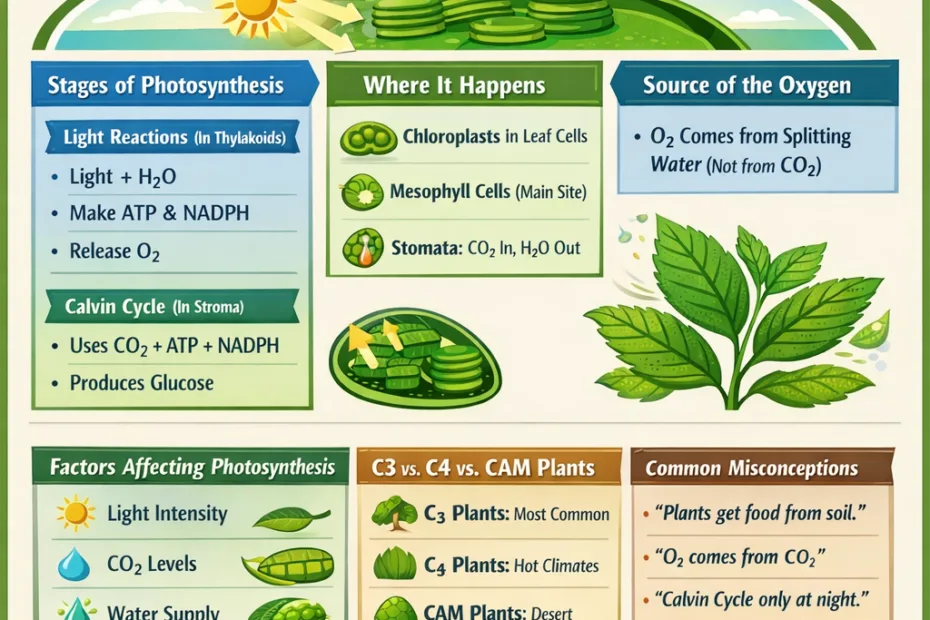
A plant leaf showing the photosynthesis equation process with sunlight, water, and CO2 entering.

Photosynthesis Equation: How Plants Make Food

Photosynthesis is the way plants, algae, and some bacteria make sugars from light—using carbon dioxide and water, and releasing oxygen along the way [a]. A Practical Way to Think About It The famous photosynthesis equation is a net summary: it’s the “receipt” for a long chain of reactions inside chloroplasts. In a real leaf, those reactions happen in two linked stages, and they’re tightly shaped… Photosynthesis Equation: How Plants Make Food

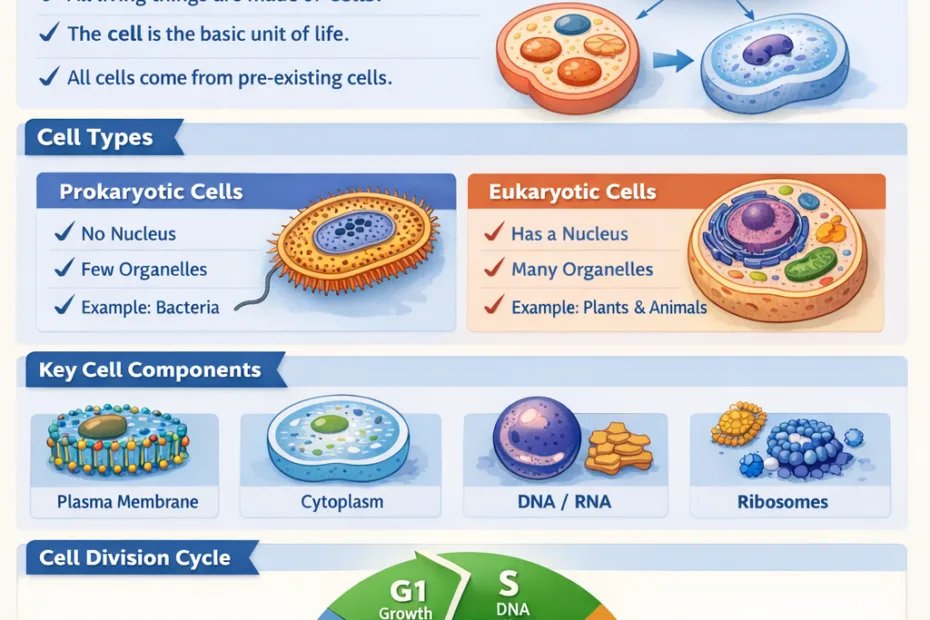
A diagram showing a cell with labeled parts like the nucleus, mitochondria, and cell membrane.

What is a Cell? Structure, Parts, and Organelles

A cell is the smallest unit of life that can carry out the basic functions needed to sustain an organism, and it forms the basic structural and functional unit of all living organisms.[Source-1]✓ A Practical Way to Think About Cells A working cell is a self-maintaining system: it keeps its inside stable, uses energy, reads genetic instructions, and builds the molecules it needs. In complex… What is a Cell? Structure, Parts, and Organelles

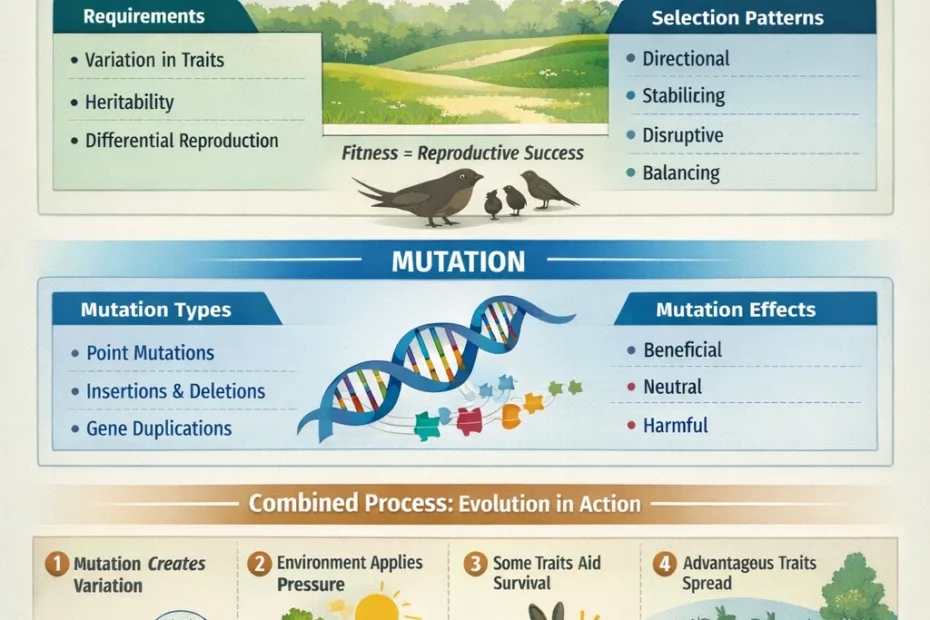
Charles Darwin's finch with different beak shapes illustrates natural selection in evolution.

Theory of Evolution: Natural Selection and Mutation Explained

The theory of evolution explains how populations of living organisms change over generations as genetic variation is produced and filtered by processes such as natural selection and mutation.[Source-1]✓ Contents What Evolution Means in Biology In biology, evolution is tracked at the population level, not as a planned change inside a single individual. A practical way to describe it is a shift in allele frequencies (versions… Theory of Evolution: Natural Selection and Mutation Explained

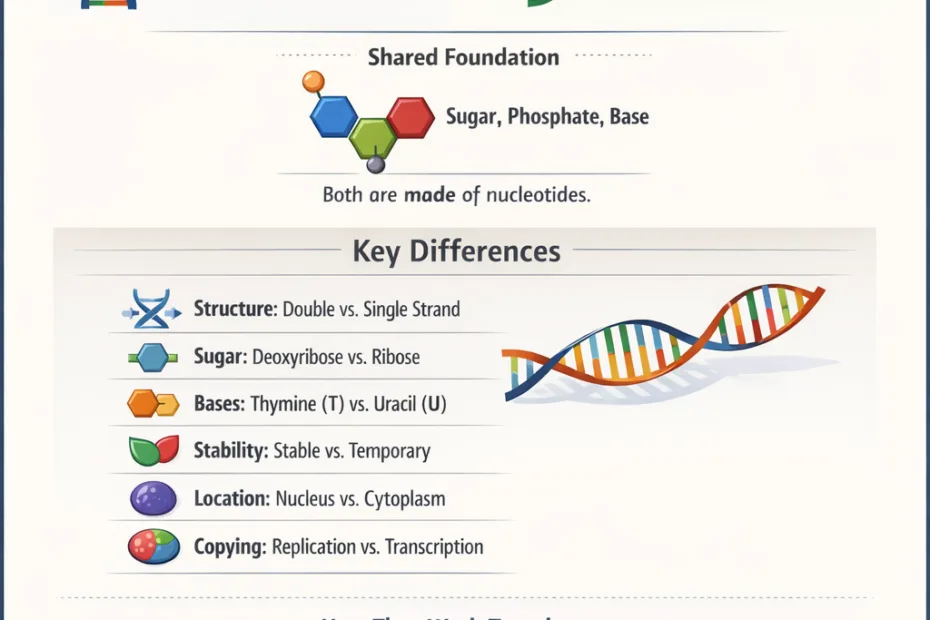
DNA and RNA comparison chart shows colored structures with key differences highlighted in text.

DNA vs. RNA: 7 Key Differences and Functions

DNA and RNA are nucleic acids—chains of nucleotides that cells use to store genetic instructions and to put those instructions to work. They are closely related, but they are not interchangeable. DNA is built for long-term stability and inheritance; RNA is built for flexibility, short-lived messaging, and hands-on roles in making molecules the cell needs. Table of Contents DNA and RNA in Plain Terms DNA… DNA vs. RNA: 7 Key Differences and Functions