Skip to content

Physics

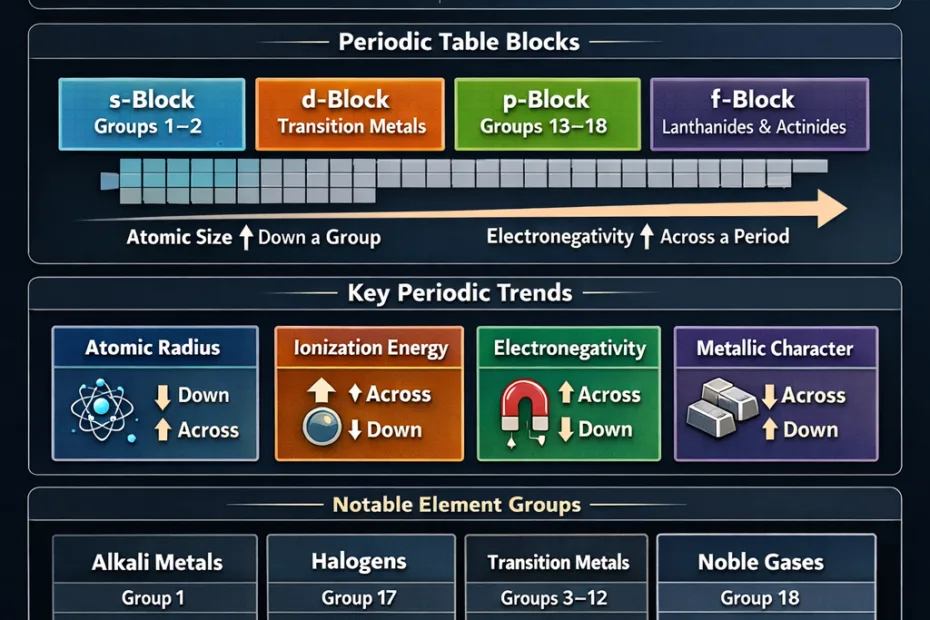
The periodic table of elements with colored groups and a close-up of colorful element spheres.

The Periodic Table of Elements: Groups and Properties

The periodic table is a map of all known chemical elements arranged by atomic number (the number of protons). Its layout is designed so elements with similar behavior line up in vertical columns called groups, while horizontal rows called periods reflect repeating patterns in electron structure.[e] đź”— A Clean Overview Before We Go Deeper When people say “groups and properties,” they usually mean one idea:… The Periodic Table of Elements: Groups and Properties
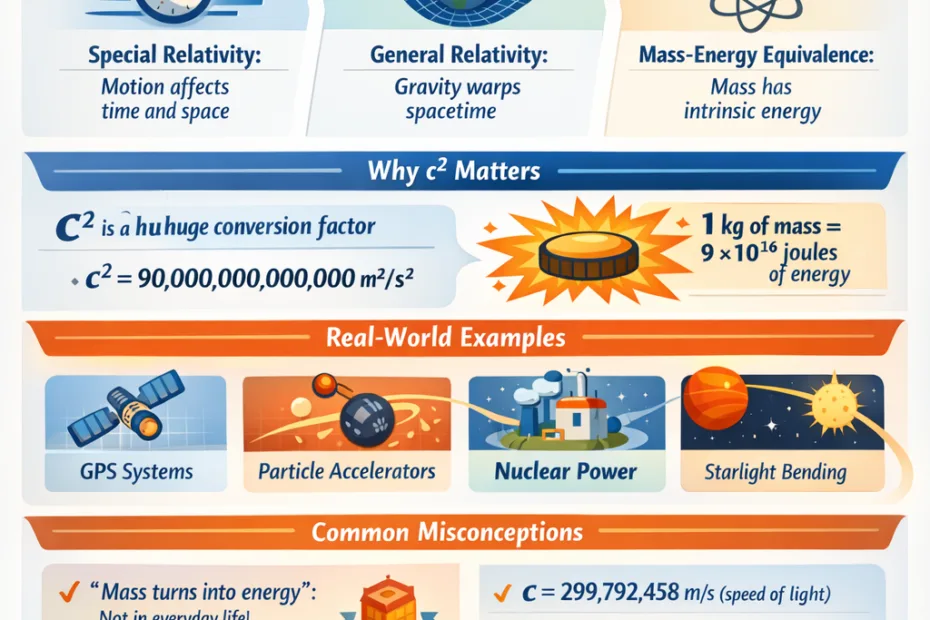
Einstein's theory of relativity simplified with a colorful illustration of a spaceship and energy symbols.

Einstein’s Theory of Relativity: E=mc² Simplified

Einstein’s theory of relativity is a set of ideas that ties space, time, mass, and energy into one picture. The famous equation E = mc² says that a body has “rest energy” simply by having mass—no motion required. A Practical Way to Read Relativity Relativity doesn’t mean “everything is random.” It means the laws of physics work the same way for everyone who’s not accelerating,… Einstein’s Theory of Relativity: E=mc² Simplified

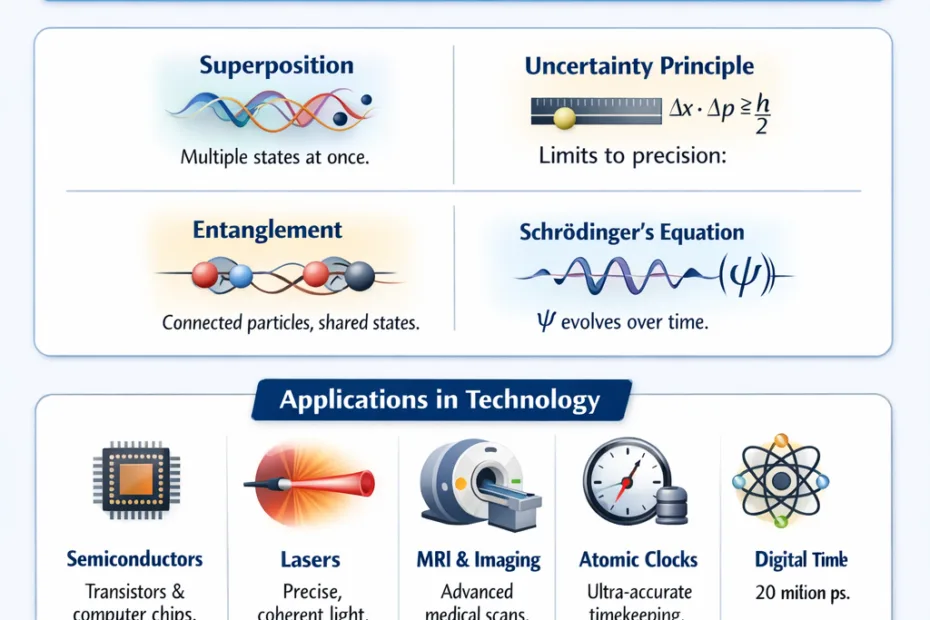
A colorful infographic illustrating quantum physics basics with atoms and wave patterns, linked to a beginners…

Quantum Physics for Beginners: Basic Principles Explained

Quantum physics is the science of how nature behaves at the smallest scales—atoms, electrons, light, and the fundamental particles beneath everyday materials. It replaces the classical idea of a world made of tiny billiard balls with a world described by probabilities, waves, and discrete (quantized) chunks. A Clear Starting Point Quantum ideas can feel strange because they don’t match how large objects behave. But the… Quantum Physics for Beginners: Basic Principles Explained

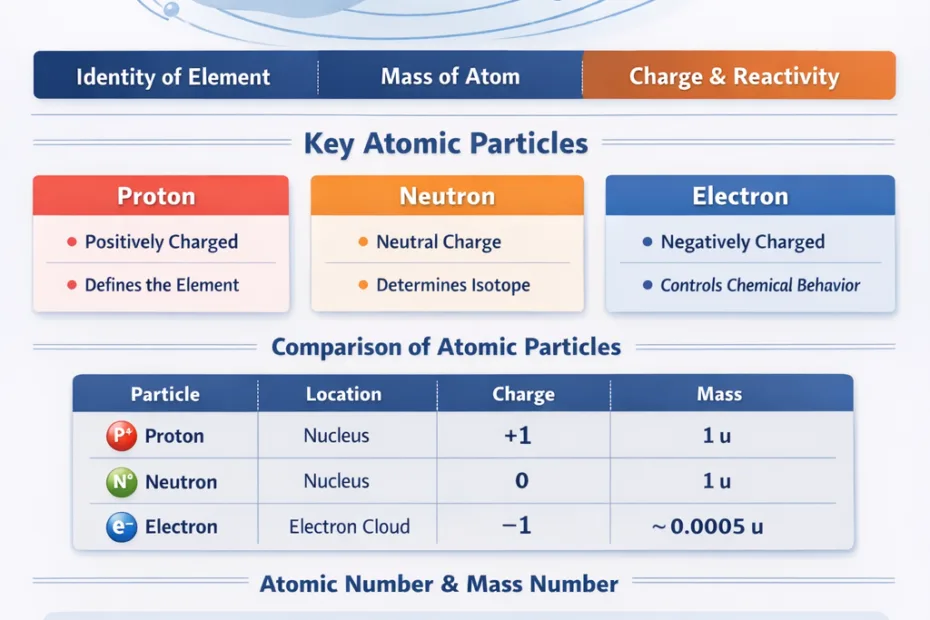
A diagram showing the structure of an atom with protons, neutrons, and electrons labeled.

The Structure of an Atom: Protons, Neutrons, and Electrons

An atom is the smallest particle that still represents a chemical element: a tiny, positively charged nucleus (made of protons and usually neutrons) with electrons around it shaping the atom’s size and behavior.[b]đź”— A Clear Picture Before the Details Atoms look simple on paper, yet they explain why matter has identity (which element it is), charge (neutral or ion), and patterns (how substances react and… The Structure of an Atom: Protons, Neutrons, and Electrons