Biology
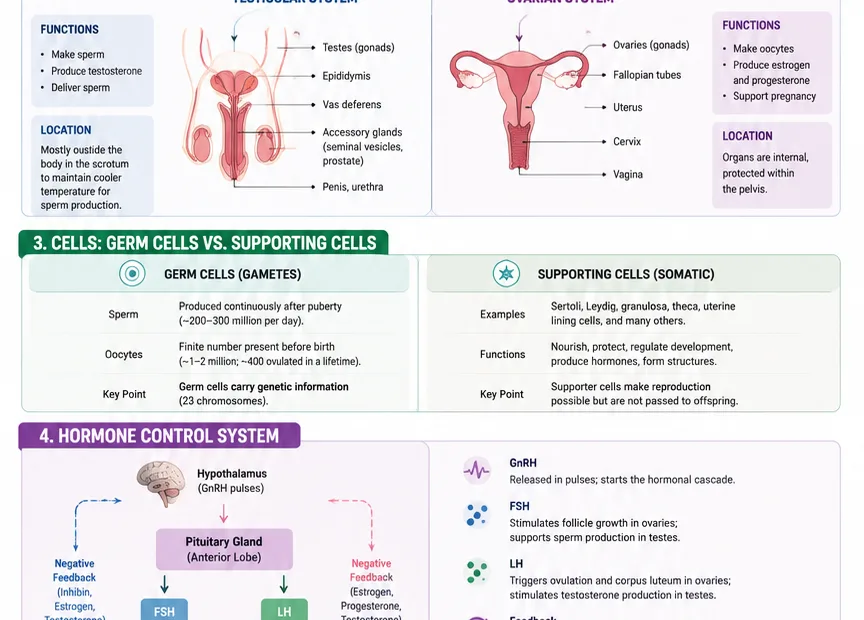
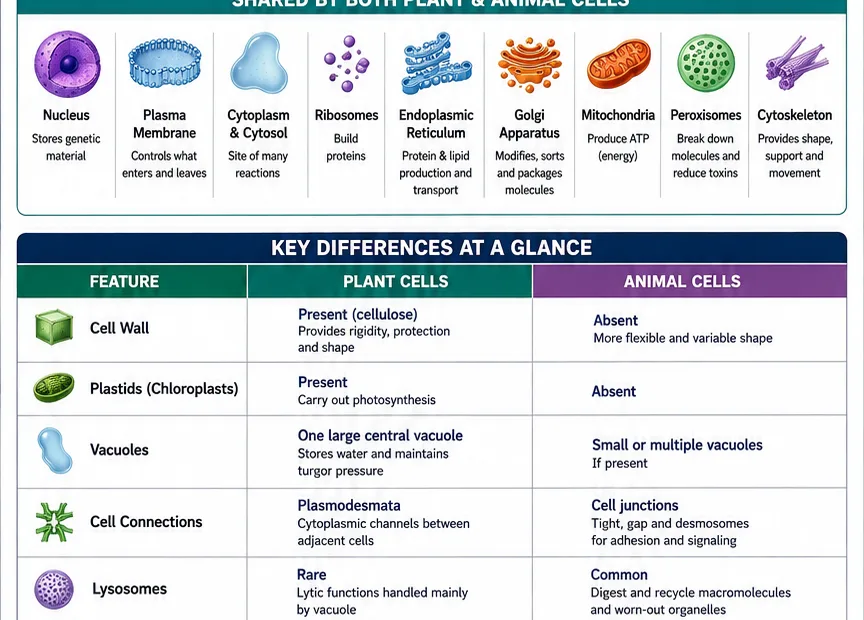


Natural Selection vs. Artificial Selection: Key Differences
Natural selection is the process in which heritable traits become more or less common because they affect survival and reproduction in a given environment. Artificial selection is the process in which humans choose which plants, animals, or other organisms reproduce because those organisms have traits people prefer. Both processes can change populations over generations, but the main difference is the source of selection pressure: the…

The Nervous System: Brain, Spinal Cord, and Nerves Explained
The nervous system is the body’s fast communication and control system. It includes the brain, the spinal cord, and the nerves that carry messages between the central control centers and the rest of the body. These messages help the body sense, move, breathe, balance, learn, react, and keep internal conditions steady. The Core Idea in Plain English The nervous system has two main anatomical parts:…

Protein Synthesis: How DNA Instructions Build Proteins
Protein synthesis is the cell process that turns DNA instructions into proteins. A protein-coding gene is first copied into messenger RNA, and that RNA is then read by a ribosome to join amino acids in the right order. In many school explanations, “protein synthesis” means the full route from DNA to RNA to protein; in a narrower molecular biology sense, it mainly refers to the…

The Human Circulatory System: Heart, Blood, and Blood Vessels
The human circulatory system, also called the cardiovascular system, is the body’s transport network. It uses the heart, blood, and blood vessels to move oxygen, nutrients, hormones, immune cells, heat, and waste products through the body. Its job is not only to “pump blood.” It keeps every living cell supplied, balanced, and connected. Blood travels in a closed loop. The heart creates pressure, arteries carry…
The Human Respiratory System: How Breathing and Gas Exchange Work
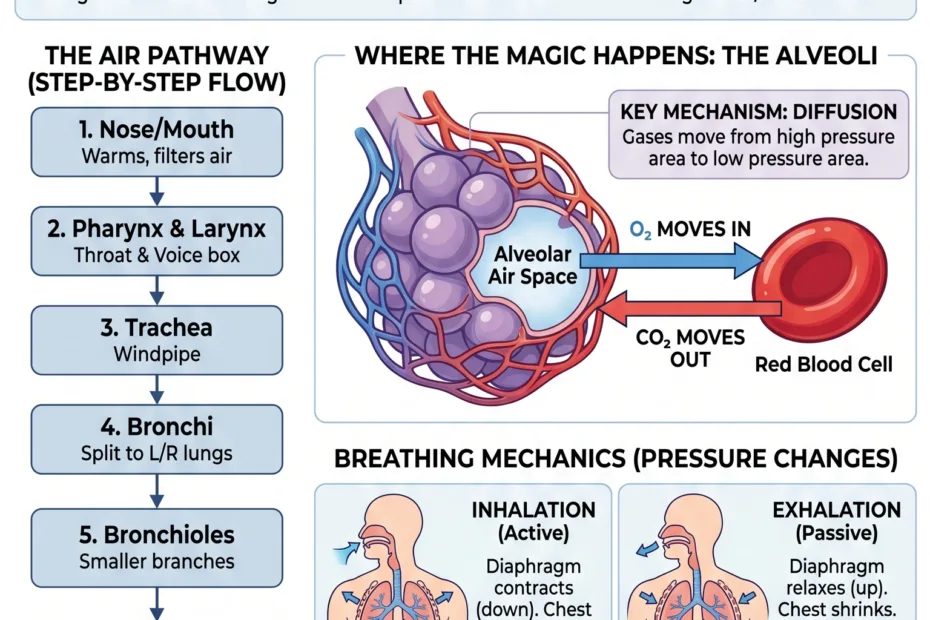
The human respiratory system is the body system that moves air into the lungs, transfers oxygen into the blood, and removes carbon dioxide from the blood. Breathing is the visible part of this process, but the real work happens deep in the lungs, where tiny air sacs called alveoli sit next to fine blood vessels and allow gases to move across a very thin surface.…
The Human Skeletal System: Bones, Joints, and Their Functions
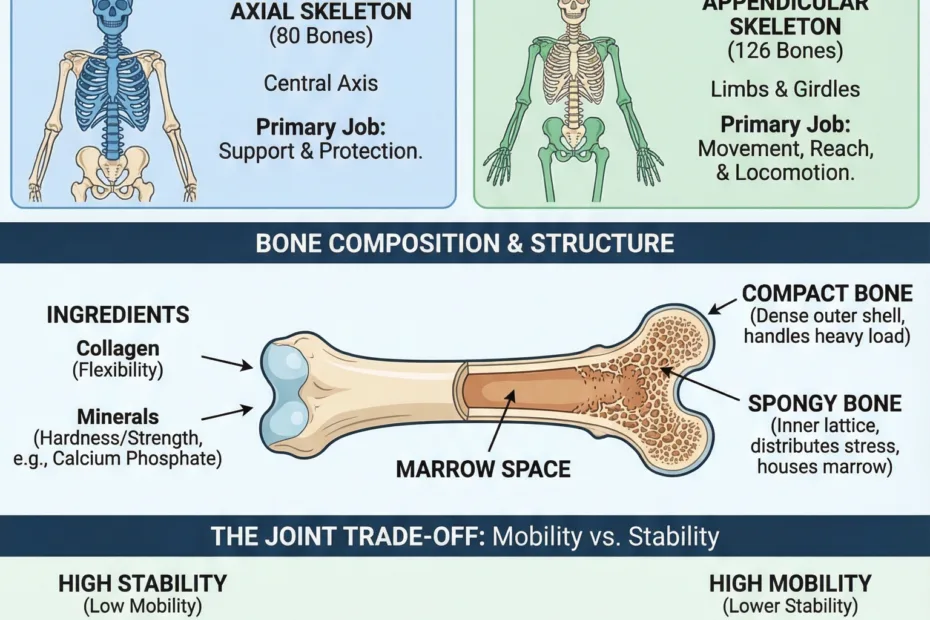
The human skeletal system is the body’s internal support system: a connected set of bones, joints, cartilage, and ligaments that gives shape, protects organs, stores minerals, and helps muscles turn effort into movement. In a typical adult, it is described as 206 named bones, but the bigger point is function: the skeleton is not dead support material. It is living tissue that changes, repairs, and…