Skip to content

Biology

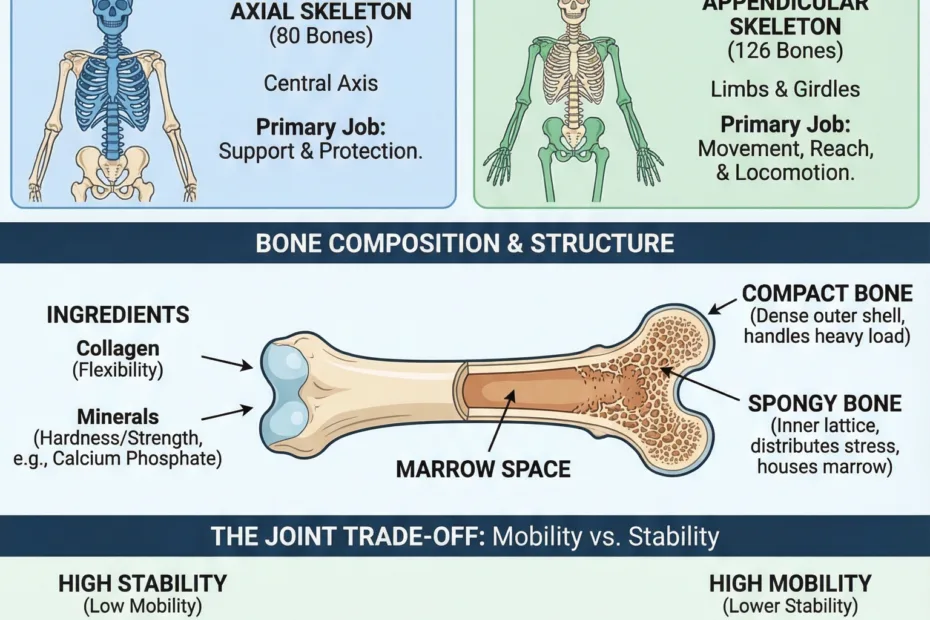
The human skeletal system explained, showing bones, joints, and their key functions in providing structure and support.

The Human Skeletal System: Bones, Joints, and Their Functions

The human skeletal system is the body’s internal support system: a connected set of bones, joints, cartilage, and ligaments that gives shape, protects organs, stores minerals, and helps muscles turn effort into movement. In a typical adult, it is described as 206 named bones, but the bigger point is function: the skeleton is not dead support material. It is living tissue that changes, repairs, and… The Human Skeletal System: Bones, Joints, and Their Functions
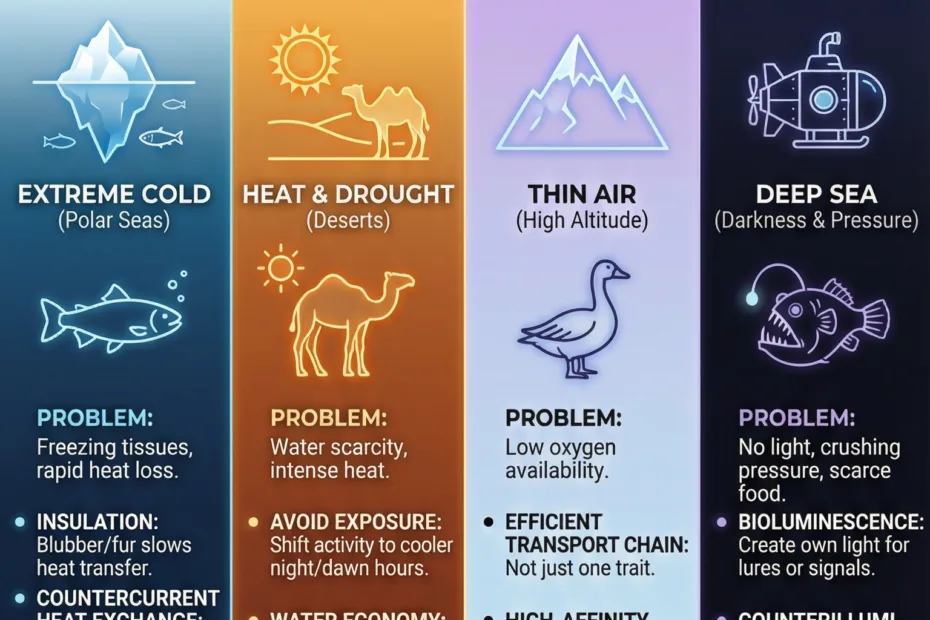
Animal adaptation strategies that help species survive in extreme environments, showcasing incredible survival techniques.

Animal Adaptation: How Species Survive Extreme Environments

Animal adaptation is a heritable trait that helps a species survive and reproduce in a given environment. In extreme habitats, that can mean holding heat, saving water, taking up oxygen from thin air, or finding food in darkness. The part many readers miss is this: adaptation is shaped across generations, not invented by one animal on demand.[a] Cold survival often combines insulation, blood-flow control, and… Animal Adaptation: How Species Survive Extreme Environments

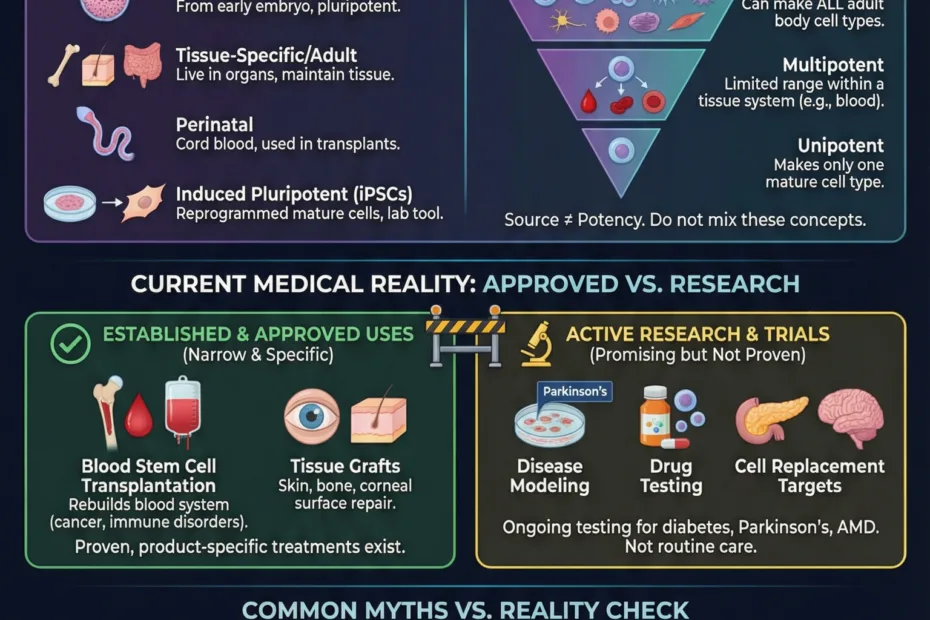
Stem cells types and function explained through an infographic highlighting their classifications and medical potential.

Stem Cells: Types, Function, and Medical Promise

Stem cells are unspecialized cells defined by two jobs: they can make more of themselves and they can turn into specialized cells. In the body, that lets them support growth, replace worn-out cells, and help repair some tissues after injury. In medicine, the same biology supports blood stem cell transplantation today and several newer cell-based approaches that are still being tested with care.[a][g] A Clear… Stem Cells: Types, Function, and Medical Promise

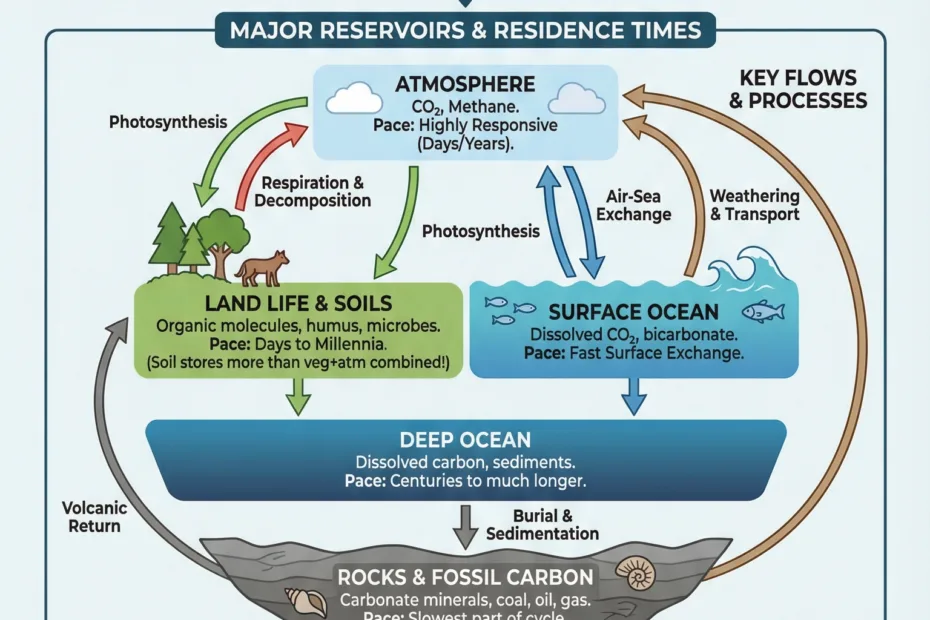
The carbon cycle explained shows how carbon moves through Earth's atmosphere, land, oceans, and living things naturally.

The Carbon Cycle: How Carbon Moves Through Earth’s Systems

The carbon cycle is the ongoing movement of carbon through the atmosphere, living things, soils, oceans, and rocks. Carbon changes form as it moves: it can be carbon dioxide in air, sugar in a leaf, organic matter in soil, bicarbonate in seawater, or carbonate minerals in sediment. The same atom can move through several of these stores, but not on one single timetable; some transfers… The Carbon Cycle: How Carbon Moves Through Earth’s Systems

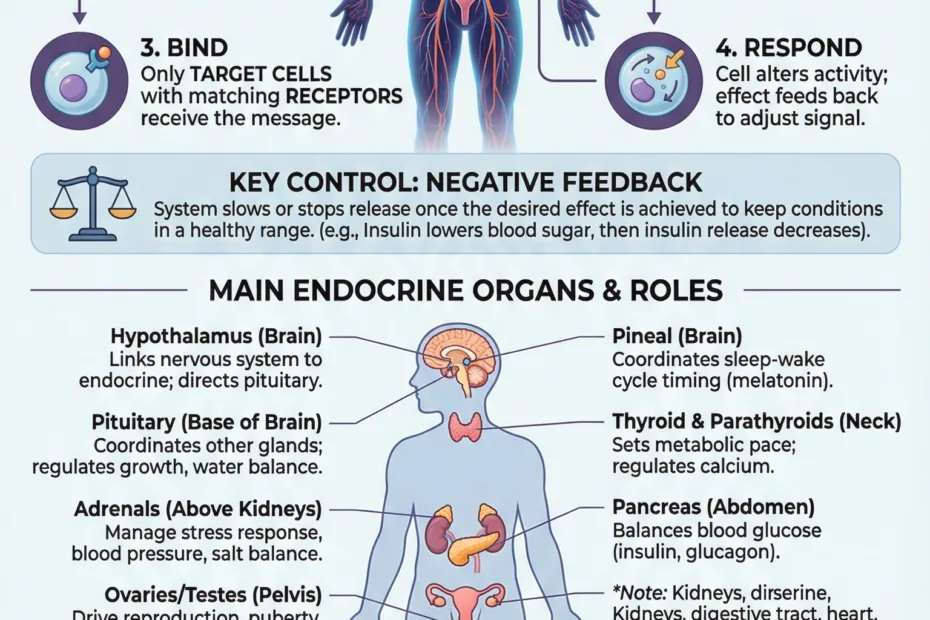
Hormones and the endocrine system help the body send signals through main organs like the brain, glands, and nerves for proper fun…

Hormones and the Endocrine System: How the Body Sends Signals

A Clear Starting Point The endocrine system is the body’s long-range signaling network. It releases hormones into the bloodstream, and those hormones change what selected cells do when the cells carry the right receptor.[a][c] That sounds simple, but the logic is elegant. A gland sends a message, blood distributes it, target cells read it, and feedback loops decide whether the message should rise, fall, or… Hormones and the Endocrine System: How the Body Sends Signals

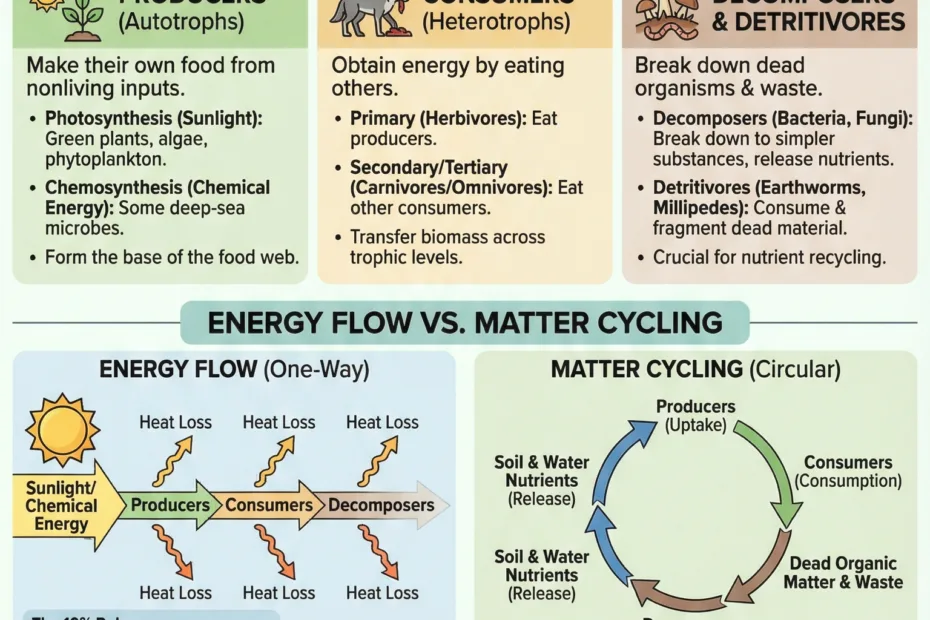
Ecosystems and food webs show how producers, consumers, and decomposers interact to sustain life in nature.

Ecosystems and Food Webs: Producers, Consumers, and Decomposers

Ecosystems are living systems made of organisms and the nonliving conditions around them, all linked by the movement of energy and matter. A food web is the feeding network inside that system: producers make biomass, consumers move it, and decomposers return usable nutrients to soil or water.[a][b] A Straight Starting Point Most ecosystems run on one repeating pattern: energy enters, biomass is built, organisms feed,… Ecosystems and Food Webs: Producers, Consumers, and Decomposers

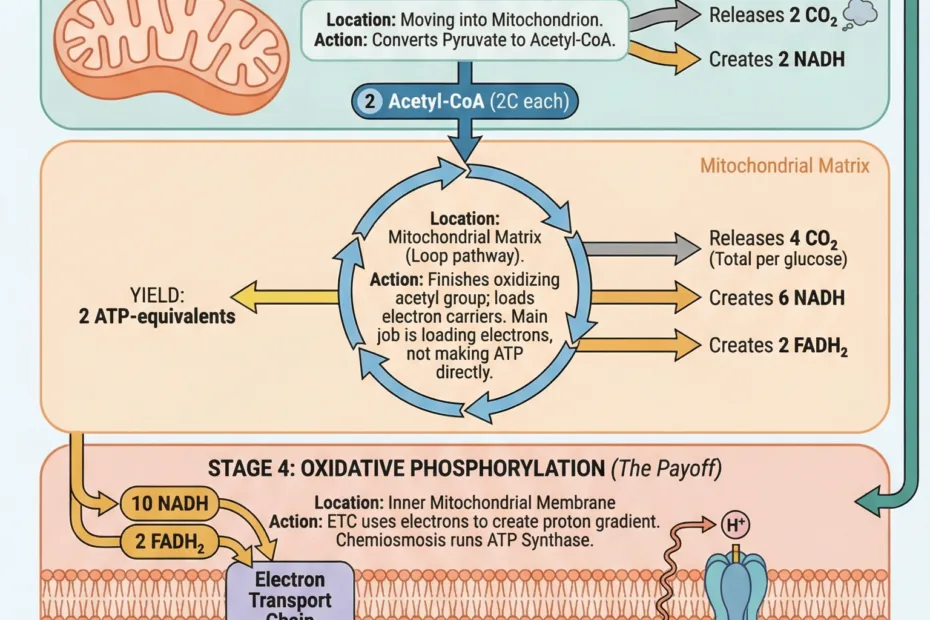
Cellular respiration explained through the process of ATP production, glycolysis, and the Krebs cycle in this detailed infographic…

What Is Cellular Respiration? ATP, Glycolysis, and the Krebs Cycle

Cellular respiration is the linked set of reactions cells use to turn the chemical energy in food into ATP, the molecule that powers everyday cell work. In eukaryotes, the process starts with glycolysis in the cytosol, moves through pyruvate processing and the Krebs cycle in the mitochondrial matrix, and ends with oxidative phosphorylation on the inner mitochondrial membrane.[b][c][d] A Clear Way to Read the Process… What Is Cellular Respiration? ATP, Glycolysis, and the Krebs Cycle

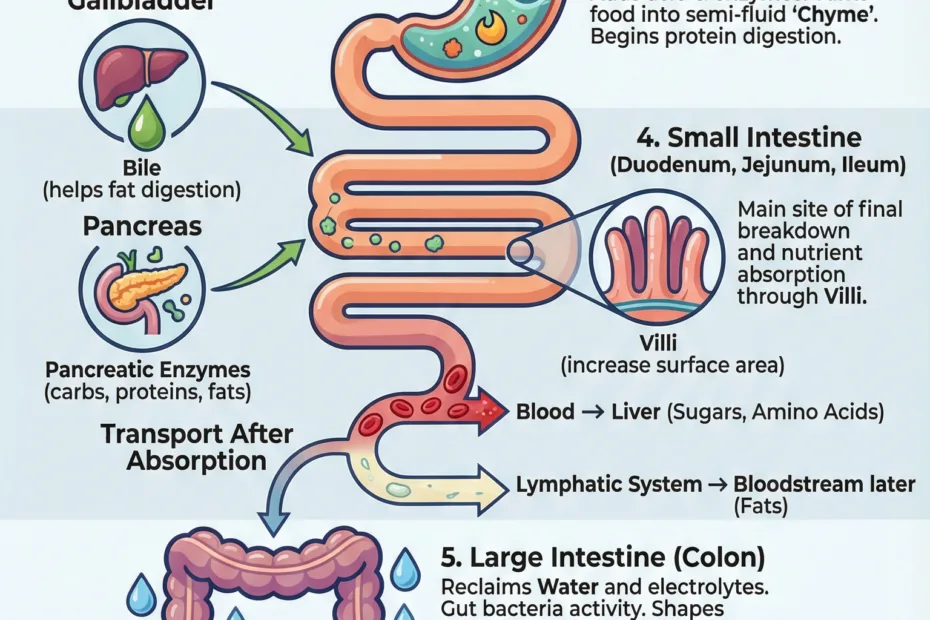
The human digestive system explained, showing how food moves through the stomach, small intestine, and large intestine for digesti…

The Human Digestive System: Step-by-Step Process

The Big Picture The human digestive system is a coordinated passage of organs and helper glands that turns food into absorbable molecules, moves those molecules into blood or lymph, and removes what the body does not use. Most short explainers stop at naming organs. The fuller story is about movement, timed chemical handoffs, selective absorption, and the quiet work of the small intestine, liver, pancreas,… The Human Digestive System: Step-by-Step Process

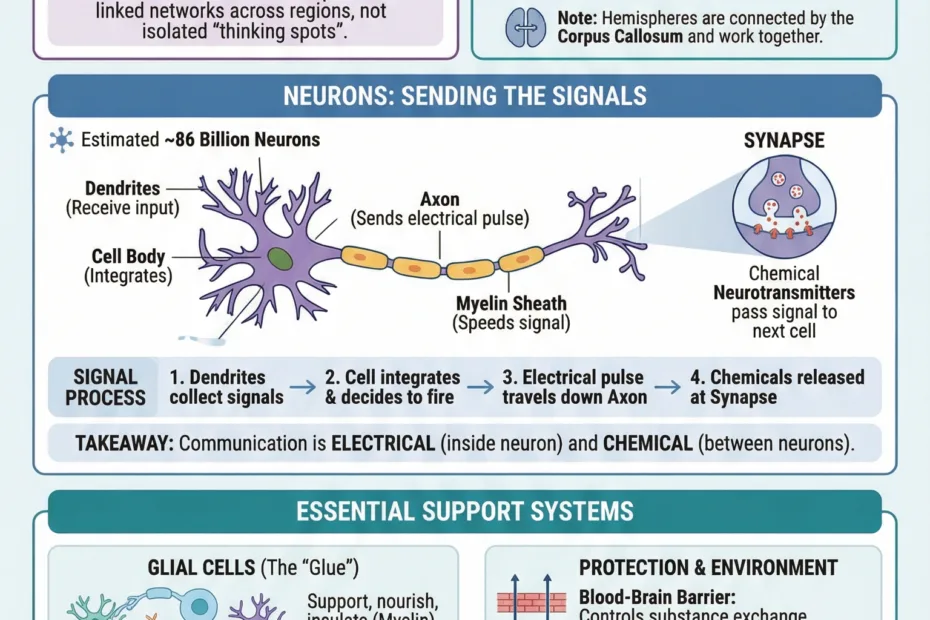
A detailed infographic explains how the human brain works, including its structure, neurons, and key functions.

How the Human Brain Works: Structure, Neurons, and Function

The human brain is the control organ of the nervous system. It receives signals from the body and the outside world, compares them with stored patterns, sends instructions, and keeps basic life functions running even when you are not thinking about them. It does this through connected regions, electrically active cells called neurons, and support cells that keep the whole system stable and fast.[a] Start… How the Human Brain Works: Structure, Neurons, and Function